
Designing for Throughput: What Restaurant Layouts Get Wrong
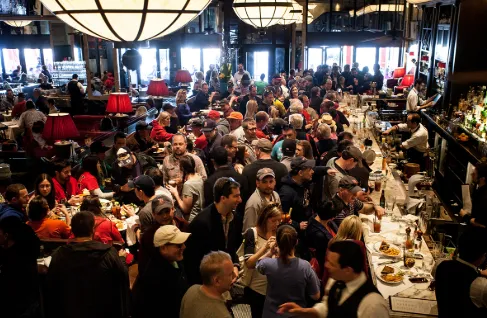
Throughput: The Silent Driver of Restaurant Success
When restaurant operators think about design, they often focus on branding, ambiance, and customer experience. But there’s a less visible—and far more critical—metric that design directly impacts: throughput.
Throughput is the rate at which your restaurant can serve customers, from order to pickup or table turn. Whether you’re fast casual, full service, or ghost kitchen, your ability to move guests through the space efficiently affects revenue, labor costs, and customer satisfaction.
Yet many restaurants—even those with impressive branding—struggle with layouts that slow operations and bottleneck service.
What Does “Designing for Throughput” Really Mean?
Designing for throughput means creating a restaurant layout that:
- Supports efficient movement of staff and guests
- Minimizes backtracking and wasted motion
- Aligns with your service model (QSR, dine-in, drive-thru, hybrid, etc.)
- Anticipates peak volume and allows for scalability
It’s about flow, not just form.
Common Restaurant Layout Mistakes That Kill Throughput
1. Cramped or Poorly Placed Prep Stations
If your prep station is squeezed into a corner or placed too far from the cook line, staff will waste valuable time and steps retrieving ingredients or utensils.
✅ Fix: Locate prep areas near the action, and ensure adequate workspace for simultaneous tasks.
2. Inefficient Expo or Pickup Zones
Many restaurants underestimate the importance of a dedicated expo or food pickup zone—especially in fast casual and to-go-heavy formats.
🔴 Problem: Orders pile up in the wrong spot, delivery drivers crowd dine-in guests, and food sits too long before handoff.
✅ Fix: Build a clearly defined, well-staffed expo area with easy access for delivery pickup and direct sight lines to the kitchen.
3. Bottlenecked Order Entry Points
In QSRs and fast casual models, poor flow at the order counter or POS slows down the entire experience. One clogged entry point causes backups in the dining area and kitchen.
✅ Fix: Consider dual POS systems or mobile order pickup stations. For high-volume locations, separate dine-in and pickup lines can double capacity.
4. No Clear Path for Guests or Staff
Many restaurant layouts look beautiful on paper but don’t account for circulation paths. Diners walk through staff routes, bussers backtrack, and lines form in awkward places.
✅ Fix: Design with movement in mind. Mark out “lanes” during planning and ensure high-traffic areas are at least 4 feet wide.
5. Not Accounting for Delivery & Takeout Growth
Restaurants that didn’t plan for off-premise sales pre-COVID are now scrambling. Takeout and delivery can represent 30–50% of sales, but most layouts still prioritize dine-in.
✅ Fix: Designate a separate entrance or handoff station for delivery drivers. Build a takeout shelf near the kitchen—not the host stand.
Why Throughput Matters More Than Ever
Today’s diners expect speed, convenience, and accuracy—especially in fast casual, QSR, and hybrid service models. Slow throughput leads to:
- Lower table turns or missed transactions
- Overworked staff and disorganized back-of-house operations
- Bad reviews due to wait times or cold food
- Lost revenue in peak periods
Design isn’t just aesthetics—it’s operational infrastructure.
Tips for Designing a High-Throughput Restaurant
- Design around your menu. Think about prep, assembly, and order timing. A complex menu requires more space and coordination.
- Simulate peak hours. Map movement during lunch rush or dinner service—how many staff? Where do they stand? What overlaps?
- Use zones. Create specific zones for food prep, expo, order-taking, pickup, and bussing to avoid collisions.
- Plan for flexibility. Modular layouts and mobile equipment can help you pivot between dine-in, pickup, and delivery as needed.
Final Thoughts: Form Should Follow Flow
The most successful restaurants don’t just look good—they work efficiently behind the scenes. By designing for throughput, operators create spaces that are faster, smoother, and better for both guests and staff.
Want faster service and stronger margins? Start with your layout.